
Bristol Cathedral
England, United Kingdom

No longer standing
Demolished or destroyed.
- Wheelchair access
- Partly accessible
From OpenStreetMap — confirm before travelling
Find out more
Bristol Cathedral, the seat of the Bishop of Bristol, originated as an abbey dedicated to St Augustine, founded in 1140 and consecrated in 1148. It became a cathedral in 1542 following the Dissolution of the Monasteries. The building displays layered medieval architecture, with its earliest surviving element being the late 12th-century chapter house, notable for containing some of England's first pointed arches. The eastern end is primarily medieval, featuring the early 13th-century Elder Lady Chapel and 14th-century Decorated Gothic styling rebuilt as a hall church with aisles matching the central choir's height. The 15th century saw the addition of rebuilt transepts and a central tower. The nave remained incomplete when the abbey was dissolved in 1539; a Gothic Revival replacement designed by George Edmund Street was constructed in the 19th century, followed by western towers by John Loughborough Pearson, completed in 1888. The cathedral retains historic memorials and an organ, though much original stained glass was lost to Victorian replacements and damage during the Bristol Blitz. It is Grade I listed.
Movement
- Built
- Type
- Anglican or Episcopal cathedral
- Heritage
- Grade I listed building
- Place
- England, United Kingdom
This building on
Architecturally similar
 Peterborough CathedralCity of Peterborough, United Kingdom
 Worcester CathedralWorcester, United Kingdom
 Chichester CathedralChichester, United Kingdom
 Christ Church Cathedral, OxfordOxford, United Kingdom
 Chester CathedralChester, United Kingdom
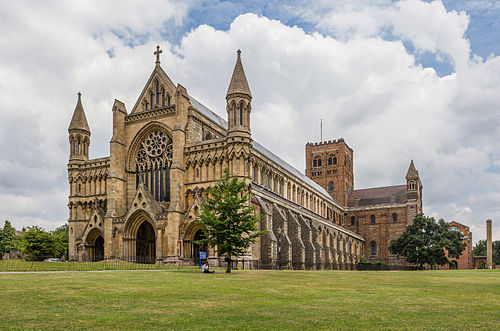 St Albans CathedralSt Albans, United Kingdom
 Bristol BeaconCity of Bristol, United Kingdom
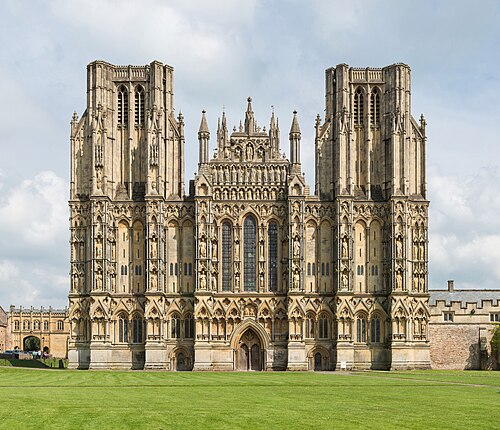 Wells CathedralWells, United Kingdom
Location