
Taj Mahal
Uttar Pradesh, India
Freely accessible
Public space — no opening hours to check.
Strollie cannot guarantee access — always check before you travel.
- Wheelchair access
- Accessible
From OpenStreetMap — confirm before travelling
Find out more
- OfficialOfficial website↗
- Heritage registerUNESCO World Heritage↗
- ReferenceKulturenvanteri↗
- Further readingEncyclopædia Britannica↗
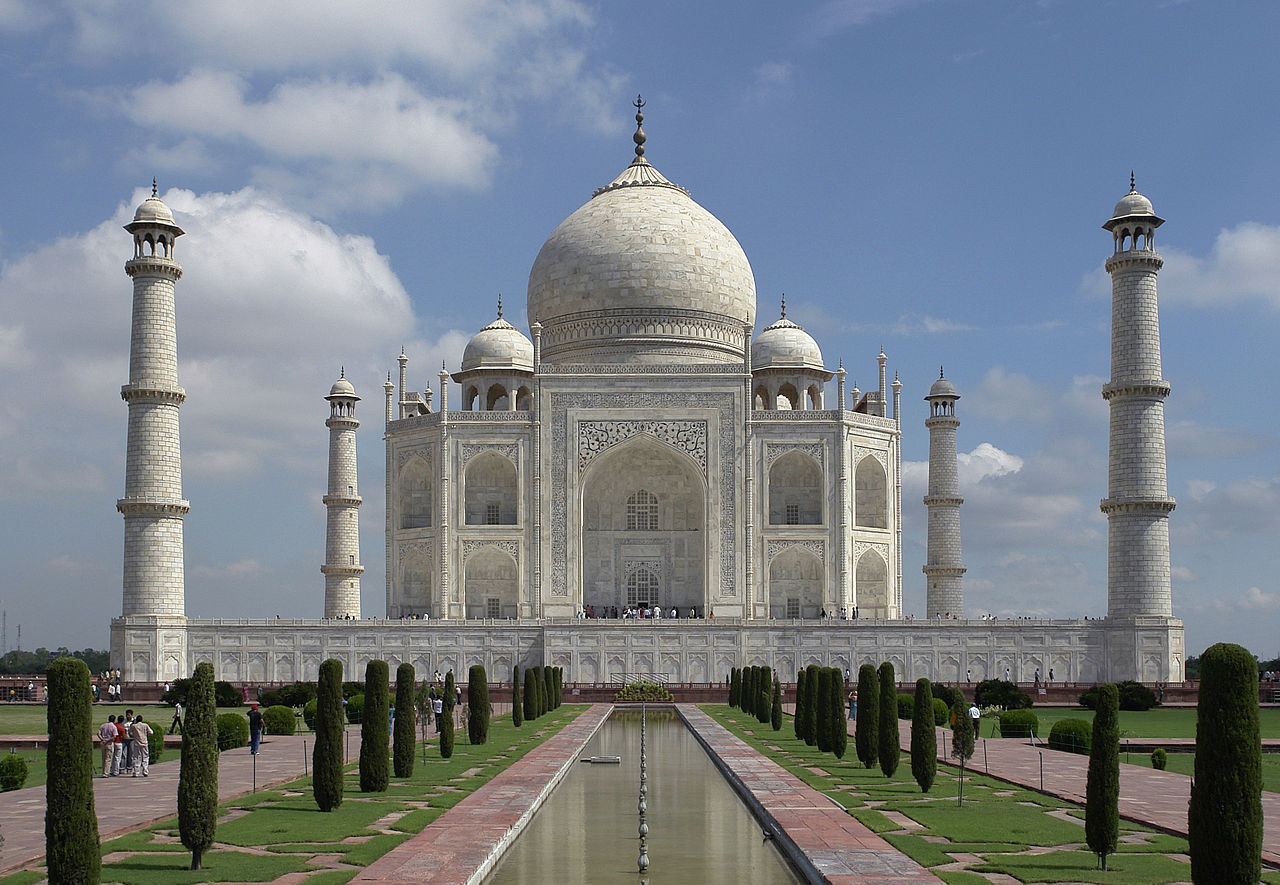
The Taj Mahal is an ivory-white marble mausoleum on the right bank of the river Yamuna in Agra, Uttar Pradesh, India, commissioned in 1631 by Mughal emperor Shah Jahan to house the tomb of his late wife Mumtaz Mahal, and later his own. Designed by Ustad Ahmad Lahori and completed in 1648, this 73-meter structure anchors a 17-hectare complex that includes a mosque, guest house, and formal gardens. The mausoleum showcases Indo-Islamic and Mughal architectural traditions through symmetrical construction and white marble inlaid with semi-precious stones, while the broader complex employs red sandstone in keeping with contemporary Mughal practice. Its construction engaged over 20,000 workers and a multinational board of master artisans. Designated a UNESCO World Heritage Site in 1983, it stands as one of the world's most celebrated examples of Islamic architecture.
Architect
Movement
- Built
- Type
- mausoleum, tomb
- Materials
- marble
- Heritage
- Monument of National Importance, World Heritage Site
- Height
- 73 m
- Place
- Uttar Pradesh, India
This building on
Architecturally similar
 Tomb of Asif KhanShahdara Bagh, Pakistan
 Humayun's TombSouth East Delhi district, India
 Taj Mahal Palace HotelMumbai, India
 Tomb of Safdar JangNew Delhi district, India
 Shah Jahan MosqueThatta, Pakistan
 Jama Masjid, Fatehpur SikriFatehpur Sikri, India
 Sheesh MahalLahore, Pakistan
 Hawa MahalJaipur district, India
Location