
Uzun Hasan Mosque
Tabriz County, Iran

Open to visitors
The interior is normally open, possibly ticketed.
Strollie cannot guarantee access — always check before you travel.
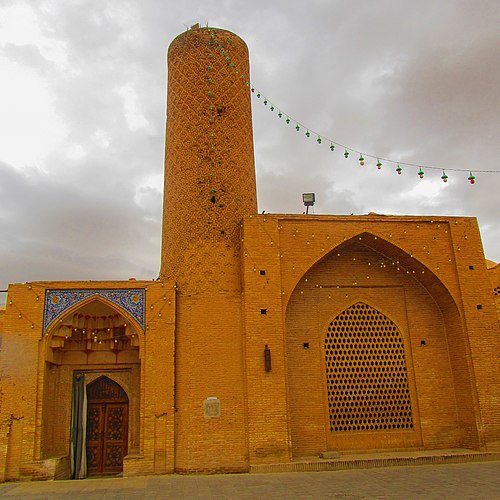
The Uzun Hasan Mosque, also known as Masjid-i Hasan Padishah, was a monumental structure built in Tabriz, Iran, by the Aq Qoyunlu ruler Uzun Hasan around 1477–78 and completed under his son Sultan Yaʿqub seven years later. Constructed in brick and tile characteristic of Timurid and Safavid architecture, the mosque stood as a grand edifice with two minarets within the Nasriyya Complex—a precinct comprising a mausoleum, madrasa, and hospital on the Sahibabad square in northern Tabriz. Both Uzun Hasan and his son were buried there. The mosque endured multiple sieges and the devastating Ottoman attacks of 1585 and 1635, though it remained one of the few structures to survive Sultan Murad IV's near-total destruction of the city. An earthquake in 1780 severely damaged the complex, which was subsequently rebuilt in 1826. The mosque appeared in period miniatures and contemporary maps by Matrakçı Nasuh and Chevalier de Chardin, testament to its architectural prominence, though little of the original structure survives today.
Movement
- Type
- mosque
- Materials
- tile, mortar, brick
- Place
- Tabriz County, Iran
This building on
Architecturally similar
 Imam Hassan Mosque (Shahrud)Shahrud County, Iran
 Al-Ashrafiya MadrasaOld City of Taiz, Yemen
 Mosque-Madrassa of Sultan HassanCairo Governorate, Egypt
 Mausoleum of SaladinDamascus, Syria
 Tabriz BazaarTabriz, Iran
 Gaz MosqueShahin Shahr County, Iran
 Emirgan MosqueIstanbul Province, Turkey
 Mosque of Ibn TulunCairo, Egypt
Location