
Brighton and Hove, United Kingdom
Royal Pavilion
Brighton and Hove, United Kingdom

Open to visitors
The interior is normally open, possibly ticketed.
Strollie cannot guarantee access — always check before you travel.
- Wheelchair access
- Partly accessible
From OpenStreetMap — confirm before travelling
Find out more
- OfficialOfficial website↗
- Heritage registerHistoric England listing↗
- ReferenceSkyscraperPage↗
- Further readingEncyclopædia Britannica↗
The Royal Pavilion in Brighton, England, is a Grade I listed palace built beginning in 1787 as a seaside retreat for George, Prince of Wales, later King George IV. Constructed in three stages, the building exemplifies the Indo-Saracenic architectural style, featuring Mughal-inspired elements including bulbous domes, chhatri-topped minarets, and cusped arches. Architect John Nash shaped the structure's distinctive appearance through extensive extensions beginning in 1815. Though used by subsequent monarchs William IV and Victoria, the Pavilion was sold to the city of Brighton in 1850 when Queen Victoria chose Osborne House as her preferred royal seaside residence. Today it functions as a historic house museum and local authority museum.
Architect
Movement
- Built
- Type
- palace, English country house, historic house museum
- Heritage
- Grade I listed building
- Place
- Brighton and Hove, United Kingdom
This building on
Architecturally similar
 The PavilionLondon Borough of Richmond upon Thames, United Kingdom
 Kensington PalaceRoyal Borough of Kensington and Chelsea, United Kingdom
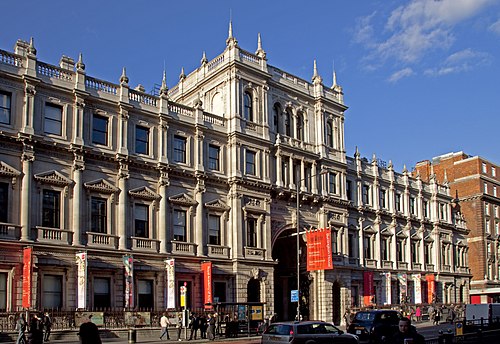 Burlington HouseCity of Westminster, United Kingdom
 Brighton Indian Soldiers War MemorialBrighton and Hove, United Kingdom
 PantheonCity of Westminster, United Kingdom
 Brighton CentreBrighton, United Kingdom
 Osborne HouseEast Cowes, United Kingdom
 Walton HallWellesbourne and Walton, United Kingdom
Location