
Electoral Palace Koblenz
Koblenz, Germany

Open to visitors
The interior is normally open, possibly ticketed.
Strollie cannot guarantee access — always check before you travel.
- Wheelchair access
- Accessible
From OpenStreetMap — confirm before travelling
Find out more
The Electoral Palace in Koblenz is a neoclassical residence commissioned in the late 18th century by Clemens Wenceslaus of Saxony, the last Archbishop and Elector of Trier, and designed by architects Pierre-Michel d'Ixnard and Antoine-François Peyre. One of the most significant examples of early French neoclassical palace architecture in southwestern Germany, it stands alongside Schloss Wilhelmshöhe, the Prince Bishop's Palace in Münster, and Ludwigsburg Palace as among the final great palaces constructed in Germany before the French Revolution. In the mid-19th century, the Prussian Crown Prince—later Emperor Wilhelm I—used it as his official residence while serving as military governor of the Rhine Province and Westphalia. Today it houses various federal government offices and has been recognized as both a protected cultural property under the Hague Convention and, since 2002, part of the Rhine Gorge UNESCO World Heritage Site.
Architect
Movement
- Type
- palace, château
- Heritage
- Kulturdenkmal
- Place
- Koblenz, Germany
This building on
Architecturally similar
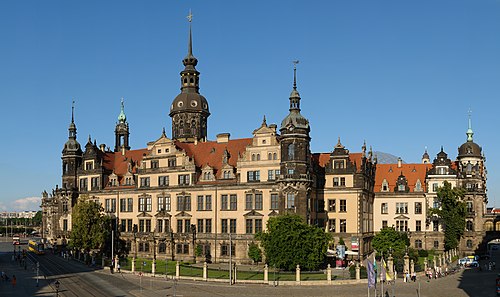 Dresden CastleDresden, Germany
 Berlin PalaceBerlin, Germany
 Electoral PalaceTrier, Germany
 Ehrenburg PalaceCoburg, Germany
 Pillnitz CastleSaxony, Germany
 Köpenick PalaceTreptow-Köpenick, Germany
 Biebrich PalaceBiebrich, Germany
 Schwetzingen PalaceSchwetzingen, Germany
Location