
Köpenick Palace
Treptow-Köpenick, Germany

Open to visitors
The interior is normally open, possibly ticketed.
Strollie cannot guarantee access — always check before you travel.
- Wheelchair access
- Partly accessible
From OpenStreetMap — confirm before travelling
Find out more
Köpenick Palace is a Baroque water palace built for the Hohenzollern electors of Brandenburg, standing on an island in the Dahme River in the Treptow-Köpenick district of Berlin. Originally constructed in 1558 as a Renaissance-style hunting lodge on the foundations of a sixth-century Slavic castle, the palace was ordered by Elector Joachim II Hector and redesigned and enlarged from 1677 under Frederick I of Prussia, who lived here with his wife Elizabeth Henrietta of Hesse-Kassel. Architects Rutger van Langevelt and Johann Arnold Nering shaped its development. The palace gained historical significance when it briefly served as headquarters for King Gustavus Adolphus of Sweden during the Thirty Years' War in 1631, and later as the site of the 1730 court-martial of the young Crown Prince Frederick II for desertion. Surrounded by an English-style park, the structure now houses the Museum of Decorative Arts, displaying Renaissance, Baroque, and Rococo masterworks in interior design from the sixteenth to eighteenth centuries.
Architect
Movement
- Type
- château
- Heritage
- cultural heritage monument in Berlin, partial heritage site
- Place
- Treptow-Köpenick, Germany
This building on
Architecturally similar
 Schönbrunn PalaceHietzing, Austria
 Charlottenburg PalaceBerlin, Germany
 Berlin PalaceBerlin, Germany
 Electoral Palace KoblenzKoblenz, Germany
 Schloss TegelReinickendorf, Germany
 Charlottenhof PalacePotsdam, Germany
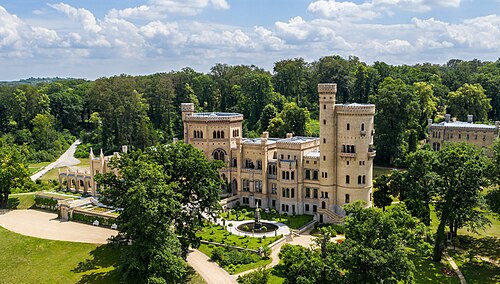 Babelsberg PalaceBabelsberg, Germany
 Schwetzingen PalaceSchwetzingen, Germany
Location